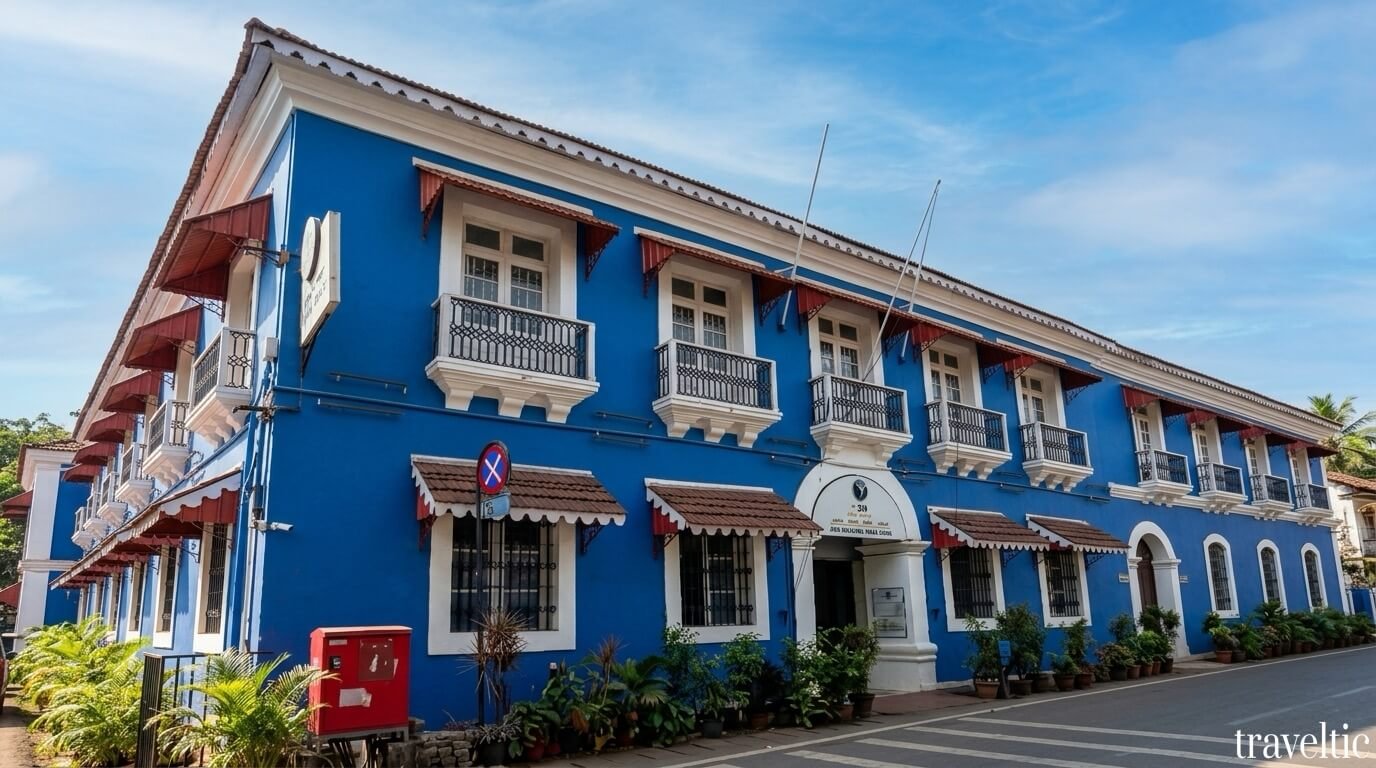
Panaji, Goa: Why India’s Smallest State Capital Is a Destination in Itself
Panaji — often called Panjim — doesn’t get the same headline treatment as Goa’s beaches, but it should. As the state capital, it sits quietly on the banks of the Mandovi River, built around narrow lanes, Portuguese-tiled houses, hilltop churches, and a riverfront promenade that comes alive every evening. Panaji is compact enough to explore on foot in a day, yet layered enough with history, food, and architecture to justify a longer stay. If your Goa trip has been all sand so far, Panaji is the easiest way to add some substance to it.
Where Is Panaji and Why Does It Matter?
Panaji sits on the south bank of the Mandovi River in North Goa, roughly 30–35 minutes from the popular beach belt of Candolim, Calangute, and Baga, and about 45 minutes to an hour from Manohar International Airport. It became Goa’s capital in 1843, replacing Old Goa after repeated epidemics pushed the Portuguese administration to relocate downstream.
Because of that shift, Panaji absorbed a wave of colonial-era planning and architecture that still defines the city today — pastel townhouses, church squares, and a riverside layout that makes it one of the most walkable capitals in India.
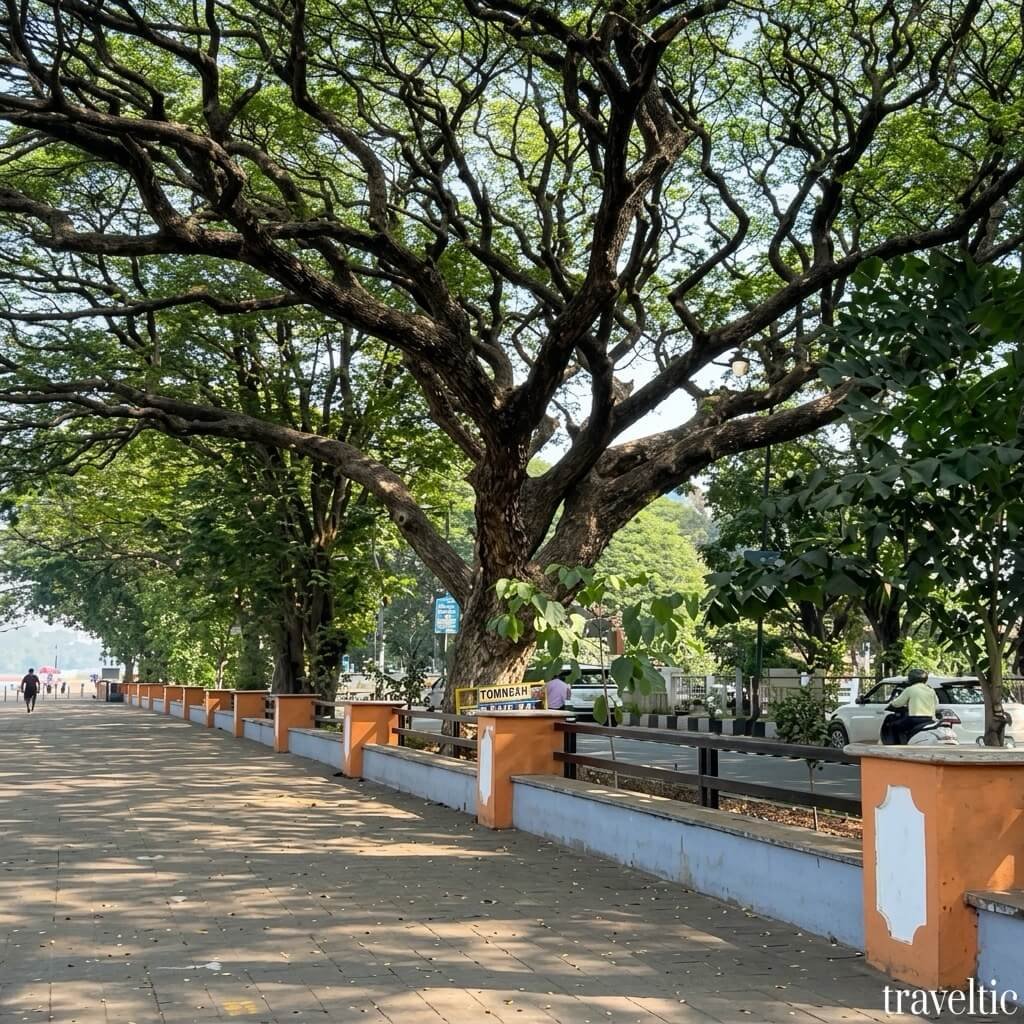
A Brief History of Panaji
Long before it became the capital, Panaji (from the Konkani “Panji,” loosely tied to the region’s low-lying land near the river) was a modest fishing settlement. Its fortunes changed in the 18th and 19th centuries as Old Goa’s population declined due to repeated cholera and malaria outbreaks, prompting the Portuguese to gradually shift administrative functions downriver.
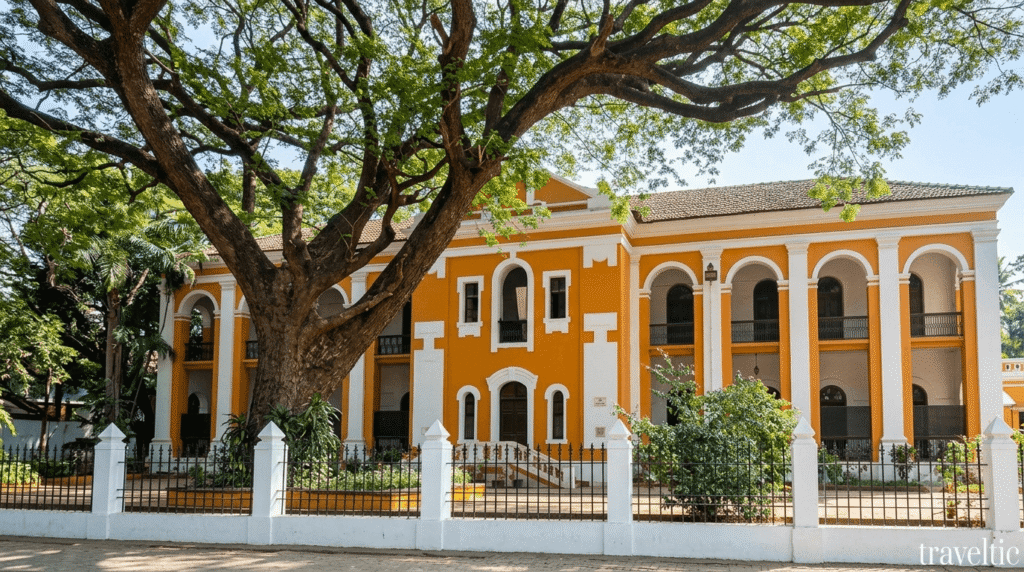
By 1843, Panaji was formally declared the capital of Portuguese Goa. The following decades saw the construction of government buildings, churches, and residential quarters that gave the city its distinct Indo-Portuguese character — most visibly preserved today in the Fontainhas and São Tomé neighborhoods.
After Goa’s liberation in 1961, Panaji continued as the capital of the Indian state of Goa, balancing its role as an administrative center with steady growth as a cultural and tourism hub.
Top Things to Do & See in Panaji
1. Fontainhas (Latin Quarter)
Panaji’s most photographed neighborhood, Fontainhas is a maze of narrow lanes lined with red-and-yellow and blue-and-white Portuguese-era houses, wrought-iron balconies, and small chapels. It’s best explored slowly, on foot, ideally with no fixed itinerary.
2. Church of Our Lady of the Immaculate Conception
This whitewashed church, perched above a staircase in the middle of the city, is Panaji’s most recognizable landmark. Its zigzag steps and baroque facade make it a natural photo stop, and the surrounding square hosts events and festivities through the year.
3. Mandovi Riverfront Promenade
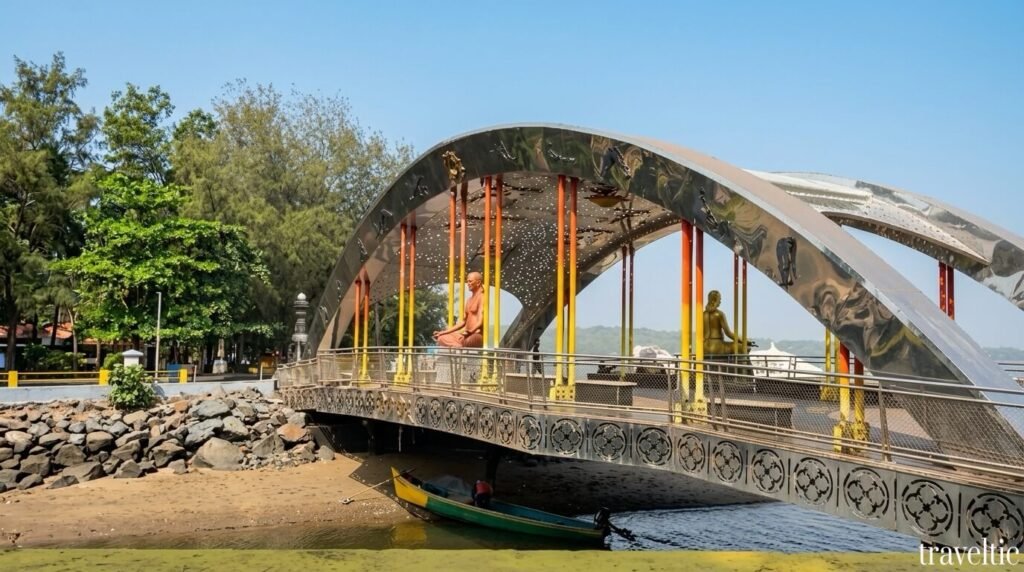
The riverfront comes alive in the evening, with locals walking, street food vendors setting up, and boats moored along the water. It’s also the departure point for river cruises, some of which include live music and dinner.
4. Panaji Municipal Market (Mercado de Panjim)
A working local market selling fish, spices, produce, and household goods — a good contrast to the curated tourist shops elsewhere in the city, and a solid spot to pick up Goan spices or cashew feni to take home.
5. Goa State Museum & Houses of Goa Museum
For a deeper dive into the region’s history and architecture, these museums cover everything from religious art to the design principles behind traditional Goan homes.
6. Miramar Beach & Dona Paula
A short drive from the city center, these give you an easy beach fix without leaving the Panaji area — quieter and more local than the northern beach belt.
Food & Local Eats in Panaji
Panaji punches well above its size when it comes to food.
- Old-school Goan-Portuguese cafés in Fontainhas serve strong coffee, local sweets, and simple breakfasts in heritage settings
- Riverfront food stalls are good for evening snacking while you walk the promenade
- Fish thali restaurants near the market area offer some of the most reliable, no-frills Goan seafood in the state
- Bakeries around the old town sell poi, bebinca, and other traditional treats fresh through the day
How to Reach Panaji
By air Manohar International Airport in North Goa is roughly 45 minutes to an hour from Panaji by taxi. Dabolim Airport in South Goa is a longer drive, around 1–1.5 hours.
By train Karmali (Old Goa) station, about 12 km away, is the nearest railway station on the Konkan Railway line, with taxis and buses connecting onward to Panaji.
By road Panaji connects easily to the North Goa beach belt (Candolim, Calangute, Baga) in around 30–35 minutes, and to South Goa’s Margao in roughly 45–60 minutes.
Within Panaji The old town is entirely walkable. For trips further out, autos, taxis, and rented scooters are the easiest options.
Best Time to Visit Panaji
Season
- Best months: November to February, for cool, dry weather ideal for walking Fontainhas and the riverfront
- Shoulder season: October and March work if you don’t mind added heat and humidity
- Monsoon (June–September): the city turns lush green and quieter, though outdoor walking is less comfortable
Time of day
- Morning: the market and Fontainhas lanes are calmest and coolest
- Evening: the riverfront and church square come alive with locals, food stalls, and better light for photos
Nearby Places to Combine With Panaji
Panaji’s central location makes it an easy base for exploring both North and South Goa.
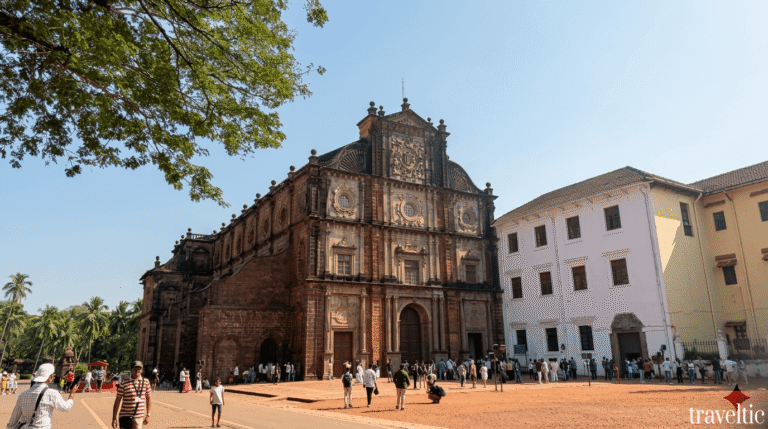
1. Old Goa — a UNESCO World Heritage cluster of churches and cathedrals, about 20 minutes away.
2. Miramar & Dona Paula — quick beach and viewpoint stops just outside the city.
3. Candolim, Calangute & Baga — the main North Goa beach belt, roughly 30–40 minutes north.
4. Divar & Chorao Islands — reachable by ferry from Old Goa or nearby jetties, offering a slower, rural side of Goa close to the capital.
Practical Tips for Visiting Panaji
- Footwear: wear comfortable shoes for Fontainhas’ sloped lanes and the church steps
- Timing: visit the market in the morning and the riverfront in the evening for the best experience of each
- Respectful photography: many Fontainhas houses are private homes — be mindful when photographing residential lanes
- Cash: smaller stalls and cafés may not accept cards — carry some cash
- Combine with day trips: Panaji works well as a base for Old Goa, Divar Island, and the North Goa beaches without needing to relocate
Final Thoughts
Panaji proves that Goa’s appeal isn’t limited to its coastline. Between the pastel lanes of Fontainhas, the evening buzz of the Mandovi riverfront, and a food scene that rewards slow exploration, the state capital offers a version of Goa that’s easy to underestimate and hard to forget. Whether you use it as a base or a day trip, Panaji deserves more time on your itinerary than it usually gets.
Is Panaji the same as Panjim?
Yes, Panaji and Panjim refer to the same city — Panjim is the more commonly used colloquial and Portuguese-derived name, while Panaji is the official name.
How far is Panaji from the North Goa beaches?
Panaji is roughly 30–35 minutes from Candolim and Calangute, and slightly further from Baga, depending on traffic.
What is Panaji known for?
Panaji is known for the Fontainhas Latin Quarter, the Mandovi riverfront promenade, the Church of Our Lady of the Immaculate Conception, and its role as Goa’s state capital.
How do I get to Panaji from Goa’s airports?
From Manohar International Airport, it’s about 45 minutes to an hour by taxi. From Dabolim Airport in South Goa, expect around 1 to 1.5 hours.
Is Panaji worth visiting if I’m staying at the beaches?
Yes — many visitors do Panaji as a half-day or full-day trip from the North Goa beach belt, combining it with Old Goa or a Mandovi river cruise.
What is the best time of day to explore Fontainhas?
Morning is best for cooler temperatures and quieter lanes; evening is better if you want to pair it with the riverfront and better light for photos.
Can I combine Panaji with other heritage sites nearby?
Yes — Old Goa’s churches, Divar Island, and Dona Paula are all within a short drive or ferry ride and pair well with a Panaji visit.