Old Goa: Why This Abandoned Portuguese Capital Is One of India’s Great Heritage Sites
Before Panaji ever existed as a capital, Old Goa was the seat of Portuguese power in Asia—a city so grand in its 16th- and 17th-century prime that it was compared to Lisbon and Rome. Today, most of that city is gone, swallowed by jungle and repeated epidemics that forced its abandonment. What remains is a cluster of enormous churches and cathedrals, several of them UNESCO World Heritage Sites, standing largely alone in green, open grounds about 10 km from present-day Panaji. Old Goa isn’t a town to wander casually—it’s a handful of monumental buildings that reward a focused half-day visit.
What Is Old Goa?
Old Goa (sometimes called Velha Goa) was the capital of Portuguese India from the early 16th century until repeated cholera and malaria outbreaks forced the administration to relocate to Panaji in the 19th century. At its peak, it was one of the largest and wealthiest cities in Asia, home to a busy port, grand religious institutions, and a population that reportedly rivaled major European capitals of the time.
As the population declined and the city was gradually abandoned, most of its secular buildings fell into ruin or were dismantled. The churches and convents, however, were maintained by religious orders and survived—which is why what you see in Old Goa today is almost entirely religious architecture set within open lawns and old tree cover.
In 1986, several of these monuments were inscribed as a UNESCO World Heritage Site under the title “Churches and Convents of Goa,” recognizing their significance in the history of Christian art and architecture in Asia.
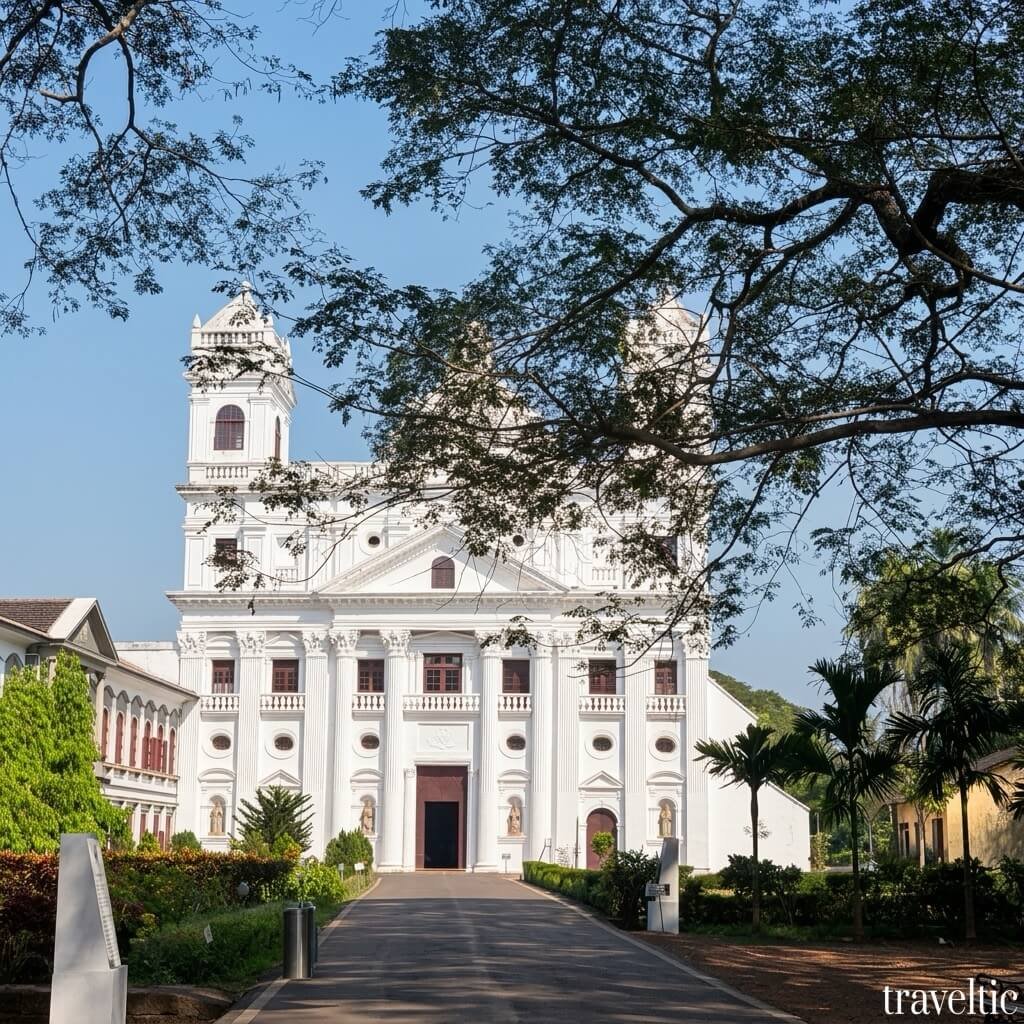
A Brief History of Old Goa
Rise as a Portuguese capital
Old Goa became the capital of Portuguese India in 1510 after Afonso de Albuquerque captured the region. Over the following century, it grew rapidly as a center of trade, administration, and Catholic missionary activity in Asia, earning it the nickname “Rome of the East.”
Decline and abandonment
By the 17th and 18th centuries, repeated outbreaks of cholera and other diseases, combined with the silting of the Mandovi River, made the city increasingly difficult to live in. The population steadily relocated downriver, and by 1843 the capital was formally moved to Panaji, leaving Old Goa largely deserted.
Preservation as a heritage site
While most residential and administrative buildings disappeared over the following centuries, the major churches and convents were kept in use and maintained, preserving a remarkable concentration of Renaissance, Manueline, and Baroque architecture. UNESCO recognition in 1986 helped formalize ongoing conservation efforts.
Top Things to Do & See in Old Goa
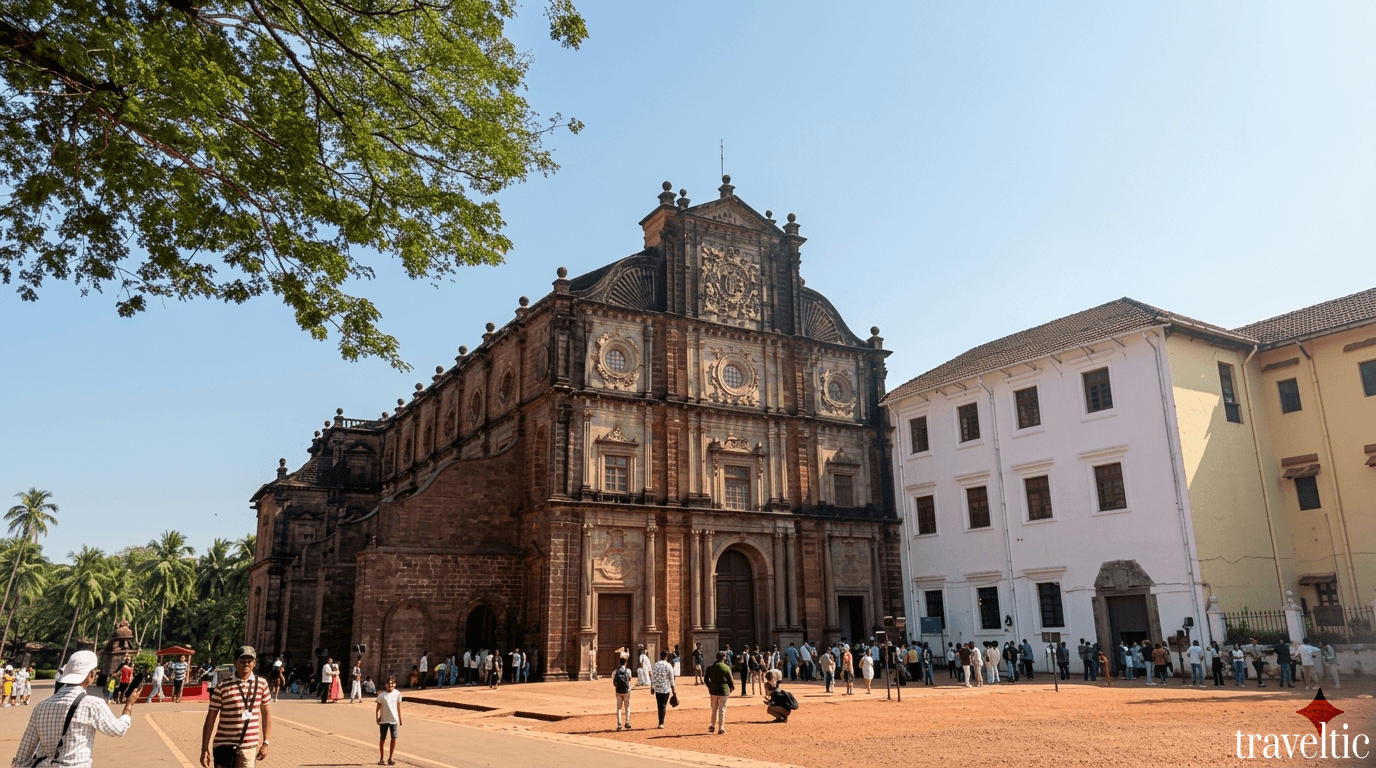
1. Basilica of Bom Jesus

Old Goa’s most famous landmark and a UNESCO World Heritage Site, this basilica holds the mortal remains of St. Francis Xavier in a silver casket. Completed in 1605, it’s one of the best-preserved examples of Baroque architecture in Asia and remains an active pilgrimage site.
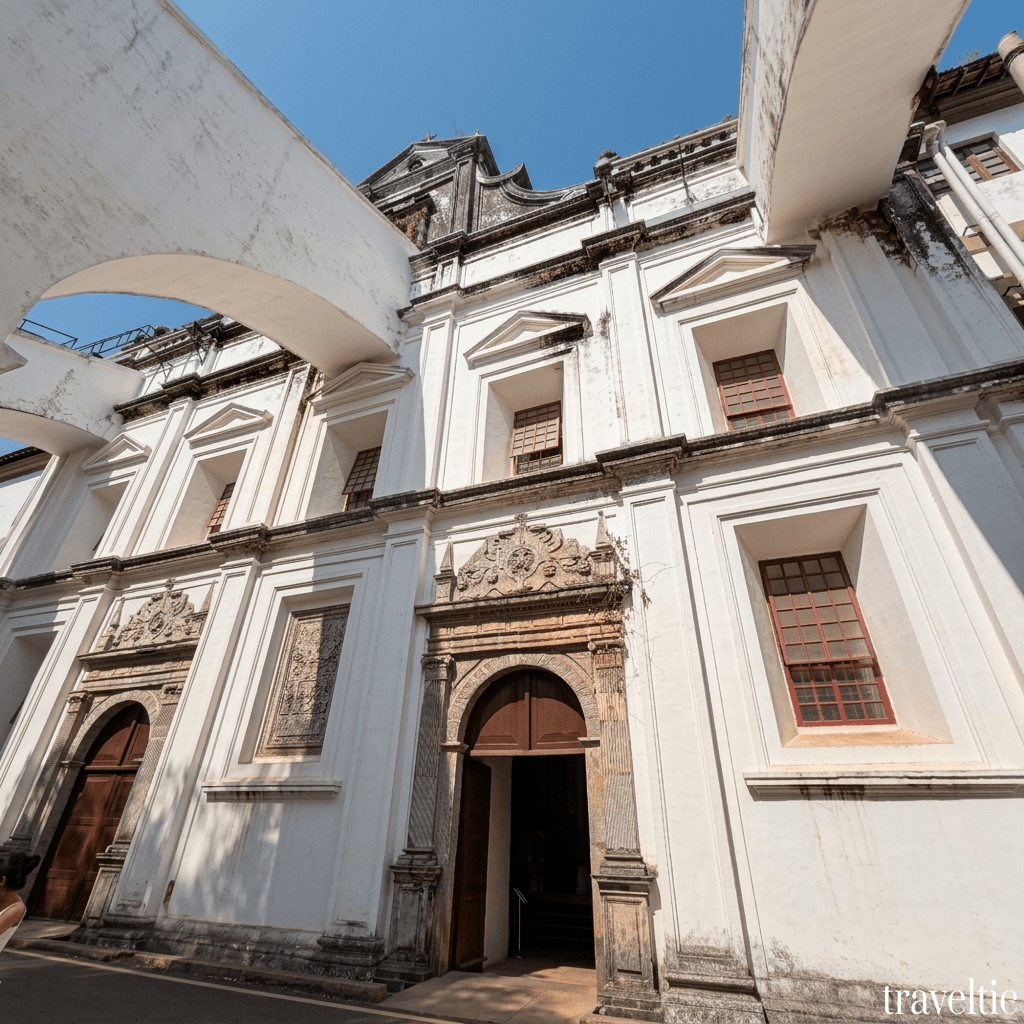
2. Se Cathedral
One of the largest churches in Asia, Se Cathedral was built to commemorate a Portuguese military victory and took nearly a century to complete. Its interior houses several ornate altars and a bell known locally as the “Golden Bell” for its rich tone.
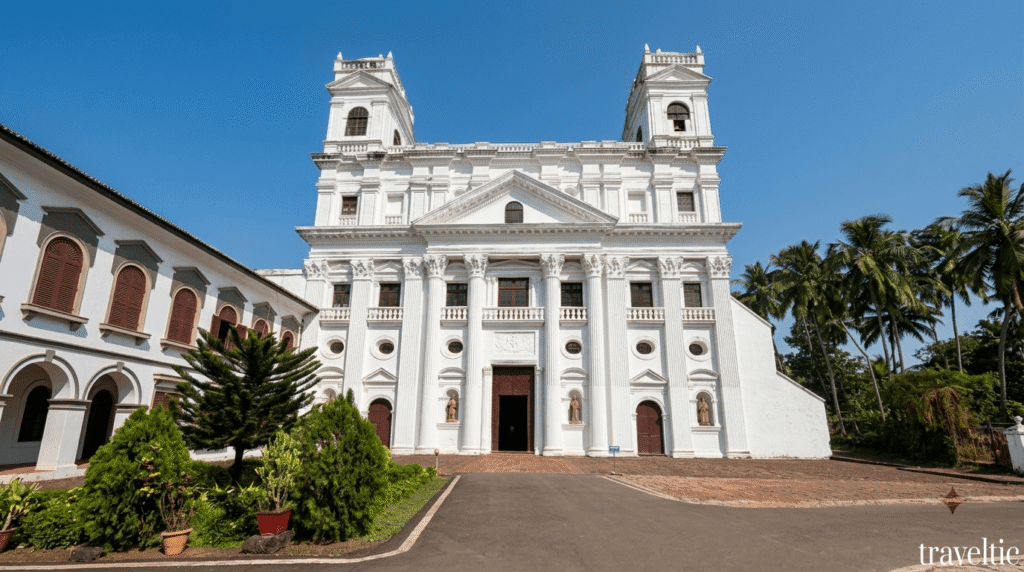
3. Church of St. Francis of Assisi & Archaeological Museum
Adjoining the cathedral complex, this church now houses an archaeological museum with portraits of Portuguese viceroys, stone sculptures, and other artifacts tracing Goa’s colonial history.
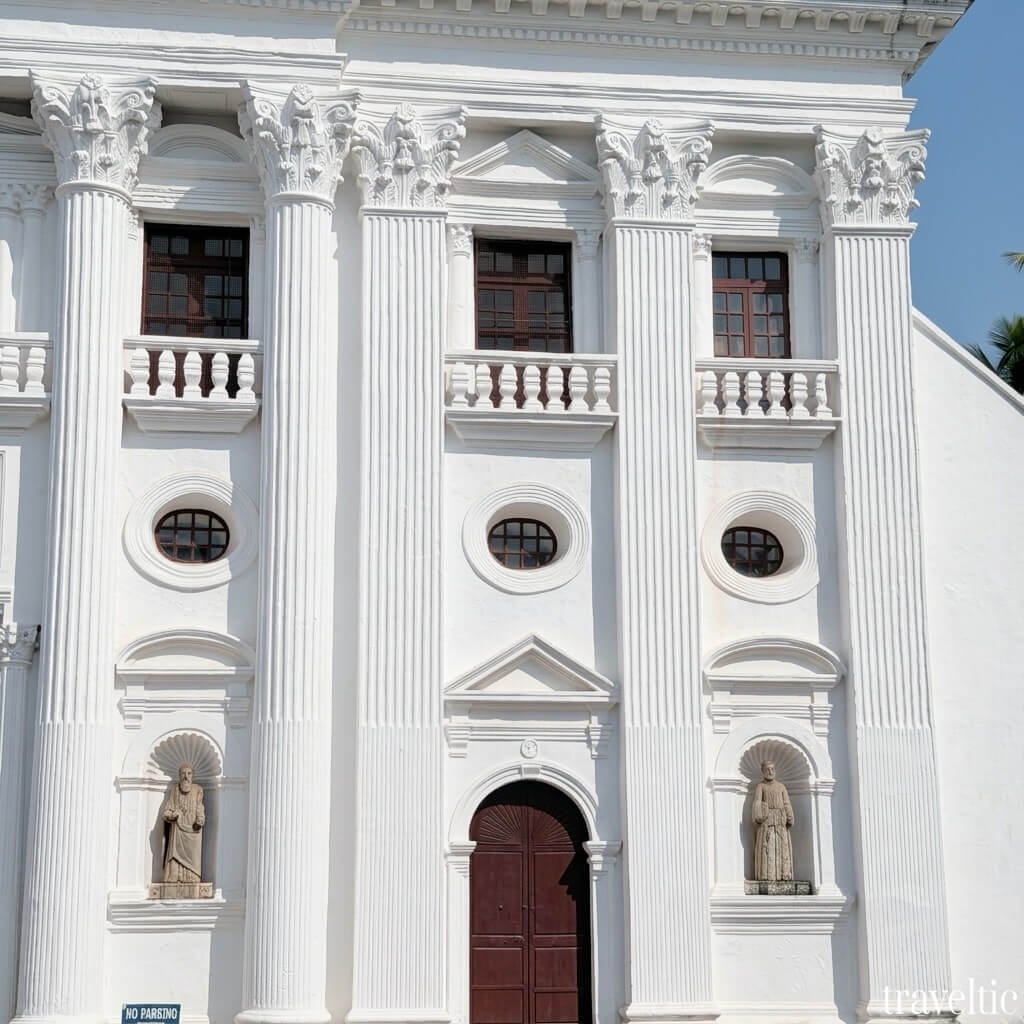
4. Church of Our Lady of the Rosary
One of the older surviving churches in the complex, notable for its Manueline architectural style — a distinctive Portuguese design from the early colonial period.
5. Ruins of the Church of St. Augustine
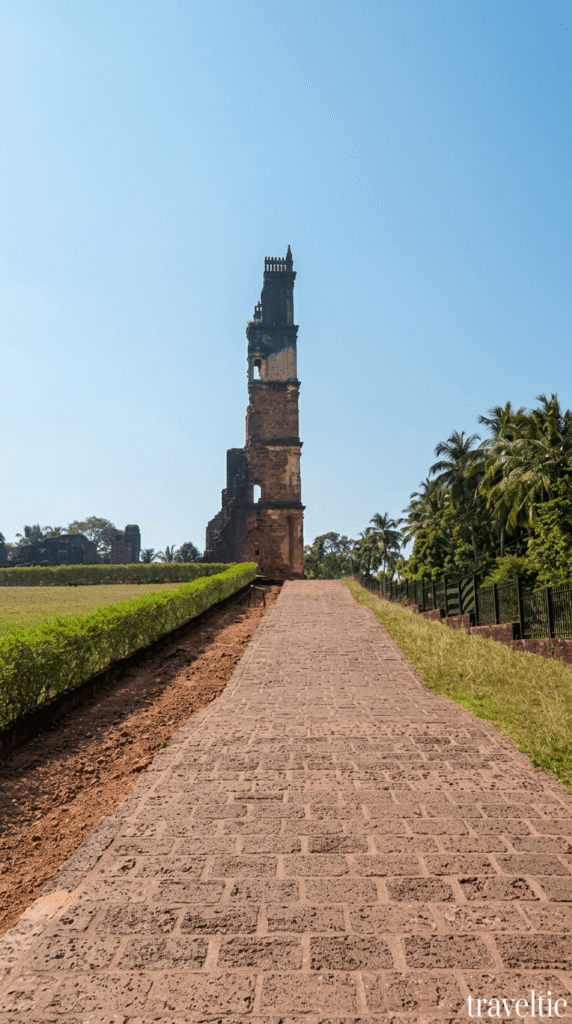
A dramatic contrast to the well-preserved churches nearby, this site is now just a towering bell tower and scattered ruins, having partially collapsed after the church was abandoned in the 19th century. It’s one of the more atmospheric, less-visited corners of Old Goa.
6. Chapel of St. Catherine
A smaller, quieter chapel commemorating the Portuguese capture of Goa, worth a stop if you’re covering the wider complex on foot.
Old Goa Timings, Location & Tickets
Timings
Most churches in Old Goa are generally open to visitors daily from around 9:00 AM to 6:00 PM, though individual church hours can vary, especially around mass times and religious holidays. The Archaeological Museum typically follows standard government museum hours and is closed on certain weekdays — check current timings before visiting.
Location
Old Goa sits on the banks of the Mandovi River, about 10 km east of Panaji and roughly 6 km from Ponda.
Tickets
Entry to most churches is free, though the Basilica of Bom Jesus and Se Cathedral may have restrictions during mass. The Archaeological Museum and a couple of specific monument sites charge a nominal entry fee.
How to Reach Old Goa
From Panaji
- By taxi/cab: around 20–25 minutes
- By bus: regular local buses run between Panaji and Old Goa along the main highway
- By scooter/bike: an easy, scenic 20-minute ride along the Mandovi
From the beach belt (Candolim/Calangute)
- Roughly 45 minutes to an hour by road, depending on traffic
Within Old Goa The main churches are close enough to walk between, though the complex is spread out with limited shade — comfortable footwear and sun protection matter here.
Best Time to Visit Old Goa
Season
- Best months: November to February, for cooler, drier weather suited to walking between monuments
- Avoid: the peak of summer (April–May) if you’re sensitive to heat, since much of the site is open and unshaded
- Monsoon (June–September): lush and atmospheric, though some outdoor areas can be muddy
Time of day
- Morning: cooler temperatures and softer light, ideal for photography and avoiding crowds
- Late afternoon: good light on the church facades, though it gets busier closer to closing time
Nearby Places to Combine With Old Goa
Old Goa’s central location makes it easy to pair with several other North Goa stops.
1. Panaji — about 20–25 minutes away, ideal for combining with Fontainhas and the Mandovi riverfront.
2. Divar & Chorao Islands — reachable by ferry near Old Goa, offering a quiet, rural contrast to the heritage site.
3. Ponda’s Temples & Spice Farms — roughly 20–30 minutes away, useful if you want to pair Portuguese-era churches with older Hindu temple architecture in a single day.
4. Candolim, Calangute & Baga — the main North Goa beach belt, about 45 minutes to an hour north.
Practical Tips for Visiting Old Goa
- Footwear: wear comfortable, sturdy shoes — the site is spread out with a fair amount of walking between monuments
- Sun protection: carry water, sunscreen, and a hat, as much of the walking is unshaded
- Dress code: as active places of worship, modest clothing is expected inside the churches (covered shoulders and knees are a safe rule)
- Respectful behaviour: avoid loud conversation or flash photography during services
- Timing: visit early or late in the day to avoid both the heat and the largest tour groups
Final Thoughts
Old Goa is a strange, moving place to walk through — a once-thriving capital reduced to a handful of enormous churches standing in open grass, still carrying the scale and ambition of the empire that built them. Whether you’re drawn by the history, the architecture, or simply the atmosphere of a city that emptied out around its own cathedrals, Old Goa is one of the most rewarding half-day trips in the entire state.
What is Old Goa famous for?
Old Goa is famous for its UNESCO World Heritage-listed churches, including the Basilica of Bom Jesus (which holds the remains of St. Francis Xavier) and Se Cathedral, one of the largest churches in Asia.
Is Old Goa a UNESCO World Heritage Site?
Yes, several of its churches and convents were inscribed as a UNESCO World Heritage Site in 1986 under “Churches and Convents of Goa.”
How far is Old Goa from Panaji?
Old Goa is about 10 km from Panaji, roughly a 20–25 minute drive.
Is entry to Old Goa’s churches free?
Most churches are free to enter, though the Archaeological Museum and a few specific monuments charge a nominal fee.
How much time do I need to see Old Goa?
A focused visit takes about 2–3 hours to see the main churches; allow closer to half a day if you want to include the museum and the St. Augustine ruins.
What should I wear when visiting Old Goa’s churches?
Modest clothing is expected since these are active places of worship — covered shoulders and knees are a safe guideline.
Can I combine Old Goa with other attractions in one day?
Yes — Old Goa pairs well with Panaji, Divar Island, or Ponda’s temples and spice farms for a fuller day trip.